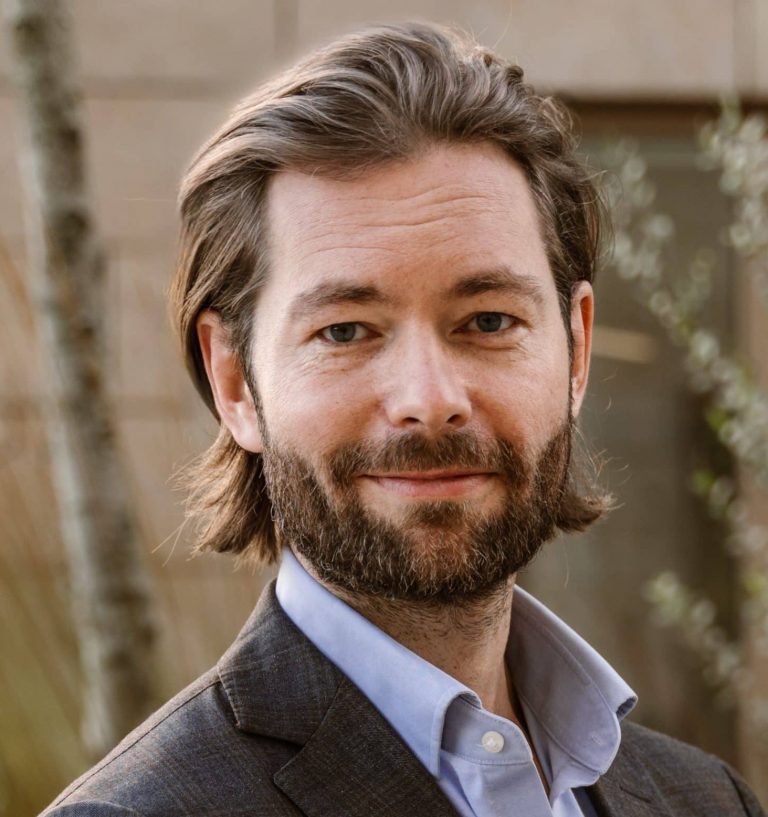
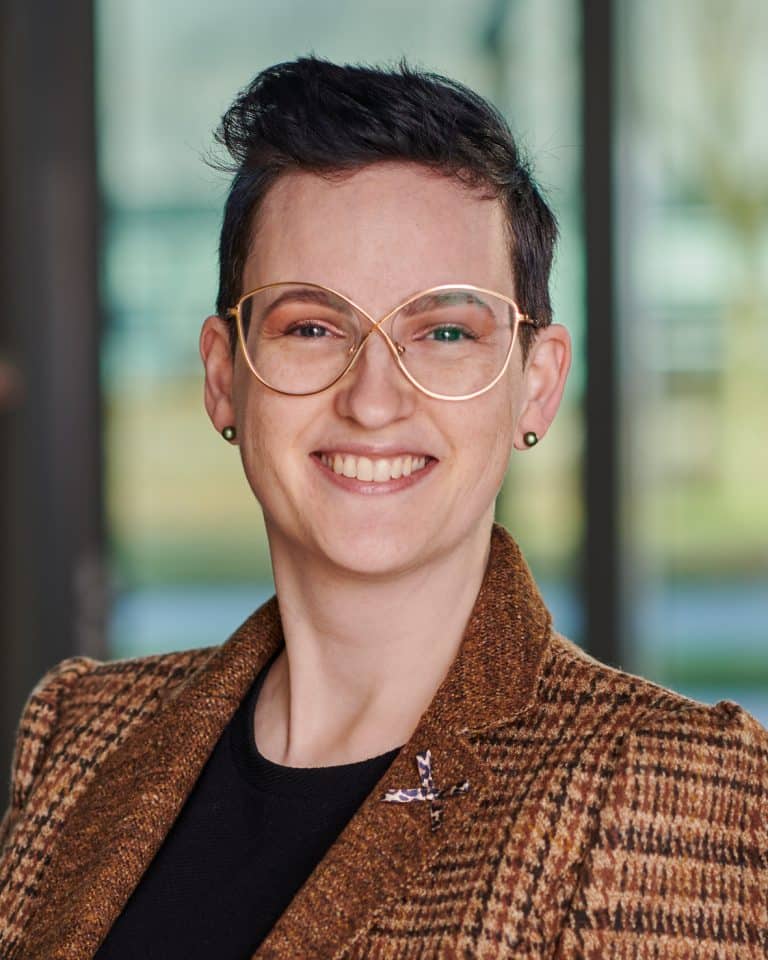
Strengthening Knowledge and Skills: The NOB Accreditation Programme in Practice – Interview with Svitlana Buriak and Martin Druga
In 2024, the NOB broadened its membership requirements so that (tax) advisors without a formal tax education or tax advisors with a foreign tax education also be considered for NOB membership. The condition is that they are affiliated with an NOB-recognised tax advisory firm and have completed at least a university master’s degree, which may also be a foreign master’s degree. For this group of members, the NOB has launched a accreditation programme.
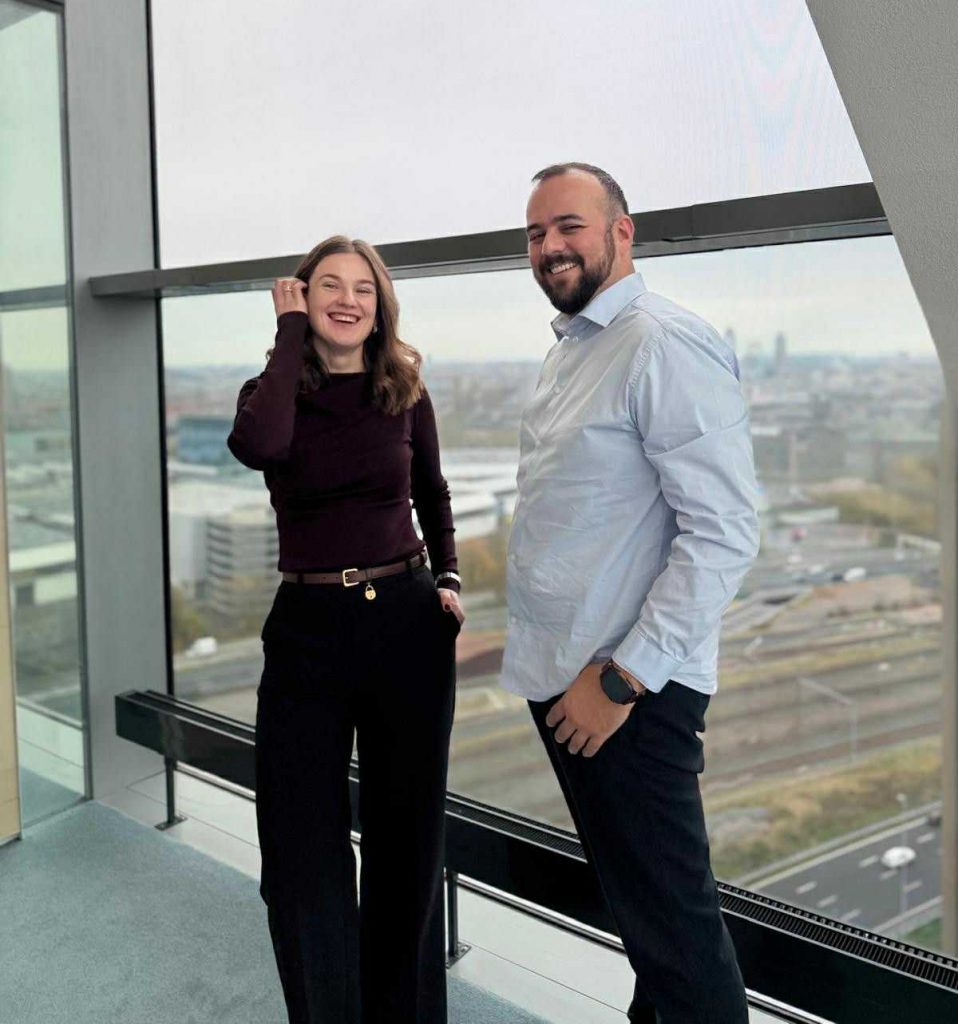
Recently, Svitlana Buriak and Martin Druga completed the programme. Below, they share their experiences and explain how it has benefited their work.
First of all, can you introduces yourself?
Svitlana: My name is Svitlana Buriak. I hold a master’s degree in business law (Central European University) and a Phd in international tax law (Vienna University of Economics and Business). I’m originally from Ukraine but my path has taken me through Austria, Budapest, and even a short stay in Singapore before I moved to the Netherlands more than four years ago. It’s been quite an international journey both professionally and personally.
I work as a tax advisor in the transfer pricing team at Loyens & Loeff and as an associate professor at the University of Amsterdam, where I teach international tax law. In my advisory work, I help large multinational companies navigate the transfer pricing aspects of their cross-border operations, ensuring compliance with both Dutch rules and global standards. It is a role that brings together everything I love: analytical work, international perspectives, and the chance to solve complex problems in a practical way.
Martin: I am Martin Druga, originally from Slovakia. I have a master’s degree in international business (Economic University of Bratislava). I’ve been living in the Netherlands for more than eight years now; I arrived in 2017. I work at EY as a senior manager in the transfer pricing practice and currently lead the Financial Services Transfer Pricing team at EY Netherlands, so my work focuses primarily on helping clients in the financial sector such asbanks, insurers, asset managers or real estate companies.
I have now been with EY for over twelve years. I initially came to the Netherlands for a short exchange, but enjoyed it so much that I decided to stay. Together with my partner Kristína, we are fully settled here by now or as you would say in Dutch, we have the “Huisje, Boompje, Beestje”, and two beautiful children who were born here.
You have both recently completed the accreditation programme. Why did you want to follow it?
Svitlana: I knew I wanted to continue my career here, so building a deeper understanding of Dutch tax law and professional standards felt like a natural next step.
The NOB is a highly regarded professional organisation, known for its strong ethical foundation and the quality it brings to the tax advisory profession. Joining such a professional community was a key motivation for me.
The accreditation programme also offers a strong selection of courses on Dutch tax law, covering personal and corporate income tax, and procedural law. I found it valuable to receive a well-structured path into the Dutch legal system, particularly as a foreign professional.
Martin: Much of what Svitlana says applies to me as well. I work in transfer pricing, which is quite a niche area within tax, but I collaborate extensively with colleagues from other tax disciplines since we aim to provide our clients with the most comprehensive advice possible. Therefore, it’s important for me to have a solid understanding of the basics of the Dutch tax law, since I believe that only then can you truly call yourself a well-rounded advisor.
Participation in the NOB is also an important step in the integration into the Dutch work culture, especially for internationals. My Dutch isn’t yet fluent enough to fully participate in Dutch-language programmes, which sometimes left me feeling a bit behind compared to my Dutch colleagues who could participate naturally from the beginning of their careers. The fact that the NOB now offers this programme in English was a significant advantage.
How did you experience the programme?
Svitlana: Overall, I had a really positive experience. with the programme. It was well-organized. Each class came with pre-assignments that allowed you to work through the material beforehand, so the sessions themselves could focus on more complex issues and discussions. I found that approach quite effective.
The courses I followed were all highly relevant to my practice. Due to my work experience, I did not have to complete the entire programme. The courses I took covered the introductory subjects, such as Dutch tax law, VAT, payroll tax, and procedural tax law.
I also valued meeting other professionals — like Martin and colleagues from other firms. Sometimes you meet them on projects, but not often in a context where you can really exchange experiences. Learning from one another, sharing perspectives, and even forming new friendships was incredibly meaningful. It creates a network of peers that continues to support your professional growth long after the programme ends.
Martin: I completely agree. Being part of this ecosystem of tax advisors who meet in these courses was very valuable. The networking aspect was very important to me as well. I also appreciated the programme’s flexibility since the curriculum was tailored to our experience, so we didn’t have to go through the entire programme – only the parts which were relevant for our level.
Which elements or insights were most helpful in your daily work?
Martin: I found the technical sessions particularly strong. The quality was high, and they helped broaden my overall tax knowledge. The ethical aspects were also very impactful since I use these tax principles daily, even when not directly working with Dutch tax law. They helped me understand the basic values and principles that we uphold as tax advisors.
Svitlana: I agree with Martin. For me, the modules on Dutch corporate tax law, procedural law, and professional ethics stood out the most. They come up a lot in practice and fit nicely with the transfer pricing work I do. The personal income tax module was also helpful for everyday life in the Netherlands.
The ethics course was really great. It was the final session, and we discussed real-life dilemmas — situations all professionals encounter. It went well beyond legal rules and touched on what it actually means to act responsibly, thoughtfully, and ethically in our work.
What would you say to colleagues considering this programme?
Martin: I get asked this often, especially by international colleagues who previously couldn’t participate because the programme was only available in Dutch. I would say: go for it, there’s no reason not to. The programme is valuable for any tax advisor working in the Netherlands.
Svitlana: I agree. The programme provides a structured way to fill gaps in knowledge that may not have been covered in your initial education. It builds a bridge between your previous background and Dutch tax practice. It’s not the endpoint, but a well-structured first step.
My practical advice: invest time in the assignments. The more effort you put in, the more you get out. And don’t underestimate the community aspect. Meeting new colleagues and building connections was truly one of the highlights for me.
Also participate in the NOB accreditation programme?
Do you want to strengthen your knowledge like Martin and Svitlana, and meet new colleagues in your field? The NOB accreditation programme offers a structured, practice-oriented introduction, including core tax knowledge, professional ethics, and specialist modules.
Curious about the available tracks? Find all the information here or contact Angelique van Streepen, Director of Education at the NOB, and take the next step in your career in the Dutch tax profession!